Product Design · UX/UI · ResearchDiseño de Producto · UX/UI · Investigación
A tangible + digital experience that turns hand-washing into play for children aged 3–5. Designed during COVID-19 to address one of the pandemic's most critical behaviors through motivation, storytelling and autonomous learning.Una experiencia tangible + digital que convierte el lavado de manos en juego para niños de 3 a 5 años. Diseñado durante el COVID-19 para abordar uno de los comportamientos más críticos de la pandemia a través de la motivación, el storytelling y el aprendizaje autónomo.
Children aged 3–5 were identified as high-risk asymptomatic carriers early in the pandemic. The problem wasn't knowledge — kids knew they had to wash their hands. The problem was sustained motivation. CLOOP is a two-part system: a tactile product (PULPI) that makes the gesture playful, and a companion app with a superhero narrative that gives it meaning. Los niños de 3 a 5 años fueron identificados como portadores asintomáticos de alto riesgo al inicio de la pandemia. El problema no era el conocimiento — los niños sabían que debían lavarse las manos. El problema era la motivación sostenida. CLOOP es un sistema de dos partes: un producto táctil (PULPI) que hace el gesto lúdico, y una app con narrativa de superhéroes que le da significado.
The result was recognized at RAD 2021, Colombia's industrial design congress, where it was presented as a case study in service design for vulnerable populations. El resultado fue reconocido en el RAD 2021, congreso colombiano de diseño industrial, donde se presentó como caso de estudio de diseño de servicios para poblaciones vulnerables.
What I didLo que hice
Skills involvedHabilidades aplicadas
Academic deep-dive
Phase 01Fase 01
March 2020. COVID-19 forces families into lockdown and hand-washing becomes the most repeated public health recommendation in the world. But repeating something doesn't make children do it — especially not with the precision and frequency required.Marzo 2020. El COVID-19 obliga a las familias al confinamiento y el lavado de manos se convierte en la recomendación de salud pública más repetida del mundo. Pero repetir algo no hace que los niños lo hagan — especialmente no con la precisión y frecuencia requeridas.
The challenge wasn't informational. Children already knew they had to wash their hands. The problem was motivation. How do you design for a behavior that a 4-year-old finds boring, repetitive and devoid of meaning?El reto no era informacional. Los niños ya sabían que debían lavarse las manos. El problema era la motivación. ¿Cómo diseñas para un comportamiento que un niño de 4 años encuentra aburrido, repetitivo y sin significado?
Design questionPregunta de diseño
How might we motivate children aged 3–5 to develop the habit of hand-washing in a playful, engaging and meaningful way?
Phase 02Fase 02
Research was conducted through observation sessions and interviews with families in quarantine. Two distinct users emerged — each with different needs and roles in the solution.La investigación se realizó mediante sesiones de observación y entrevistas con familias en cuarentena. Surgieron dos usuarios distintos — cada uno con necesidades y roles diferentes en la solución.
María José "Majo"
Primary user · Age 3–5Usuario primario · Edad 3–5
Curious, loves learning through play and identifying with characters. Attends online school from home — her parents actively create activities to keep her engaged. Motivated by storytelling and symbolic play.Curiosa, le encanta aprender jugando e identificarse con personajes. Asiste a clases virtuales desde casa — sus padres crean activamente actividades para mantenerla comprometida. Motivada por el storytelling y el juego simbólico.
Silvia & Álvaro
Secondary user · Young parentsUsuario secundario · Padres jóvenes
Working from home while managing their daughter's learning. Creative and motivated to support development — need tools that are educational and work without constant supervision.Trabajan desde casa mientras gestionan el aprendizaje de su hija. Creativos y motivados para apoyar el desarrollo — necesitan herramientas educativas que funcionen sin supervisión constante.
Intrinsic motivation matters more than rules. Children who understood why they were washing were more consistent than those who were told to do it.La motivación intrínseca importa más que las reglas. Los niños que entendían por qué se lavaban eran más constantes que aquellos a quienes simplemente se les decía que lo hicieran.
Symbolic play builds autonomy. When children identify with a hero character, they replicate behaviors associated with that identity — including responsibility and self-care.El juego simbólico construye autonomía. Cuando los niños se identifican con un personaje héroe, replican comportamientos asociados a esa identidad — incluyendo responsabilidad y autocuidado.
Sensory texture drives engagement. Objects with tactile variation hold a child's attention longer and create stronger product attachment.La textura sensorial impulsa el compromiso. Los objetos con variación táctil mantienen la atención del niño por más tiempo y crean un vínculo más fuerte con el producto.
Remote testing was the constraint that shaped the solution. COVID-19 isolation forced the validation protocol to be conducted via ICT tools — which revealed that parental involvement amplifies child engagement rather than diminishing autonomy.El testing remoto fue la restricción que moldeó la solución. El aislamiento por COVID-19 obligó a realizar el protocolo de validación por herramientas TIC — lo que reveló que la participación de los padres amplifica el compromiso del niño en lugar de disminuir su autonomía.
Phase 03Fase 03
CLOOP is a two-part system designed around both types of motivation — intrinsic (the child wants to become a hero) and extrinsic (the product rewards the behavior).CLOOP es un sistema de dos partes diseñado alrededor de ambos tipos de motivación — intrínseca (el niño quiere convertirse en héroe) y extrínseca (el producto recompensa el comportamiento).
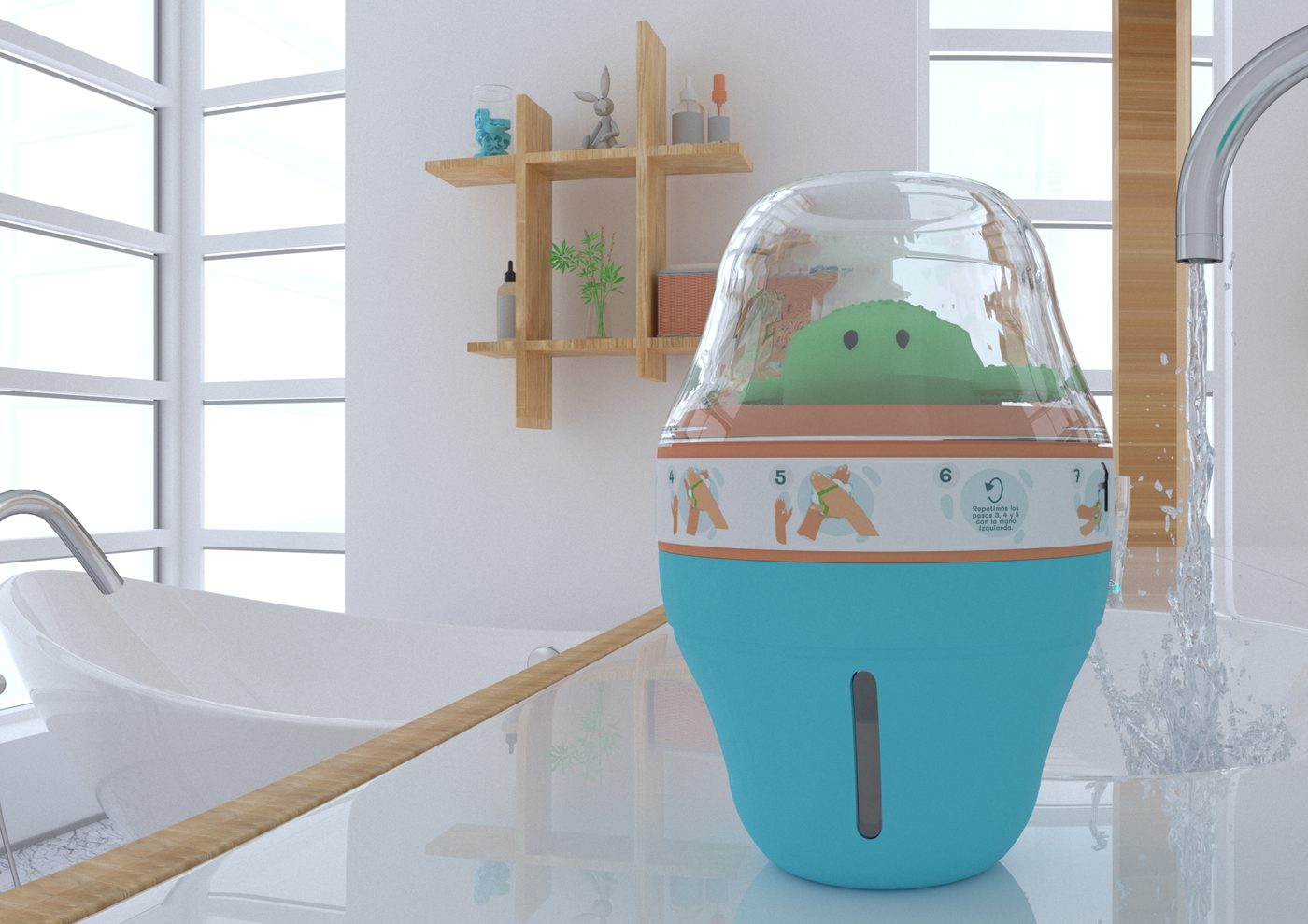
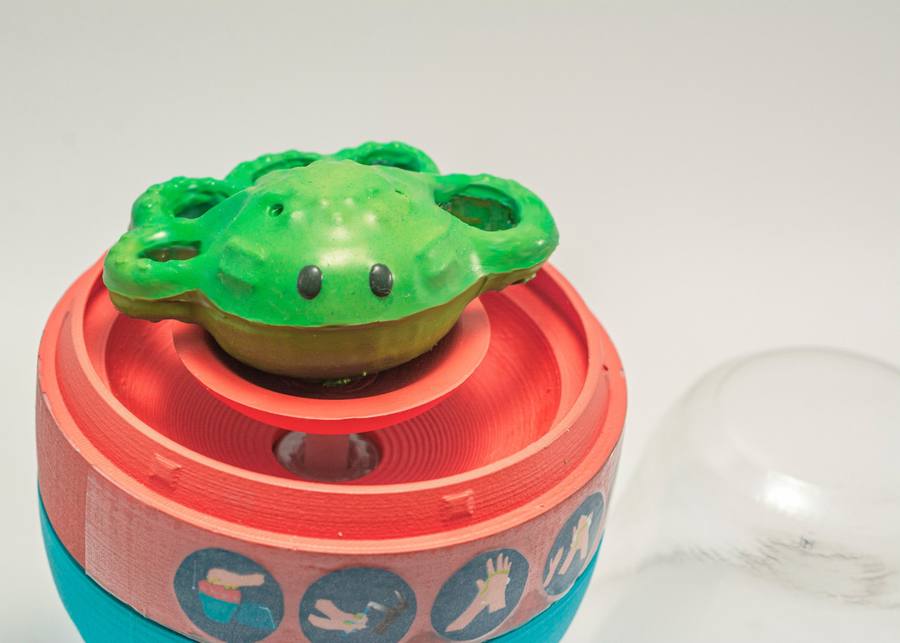
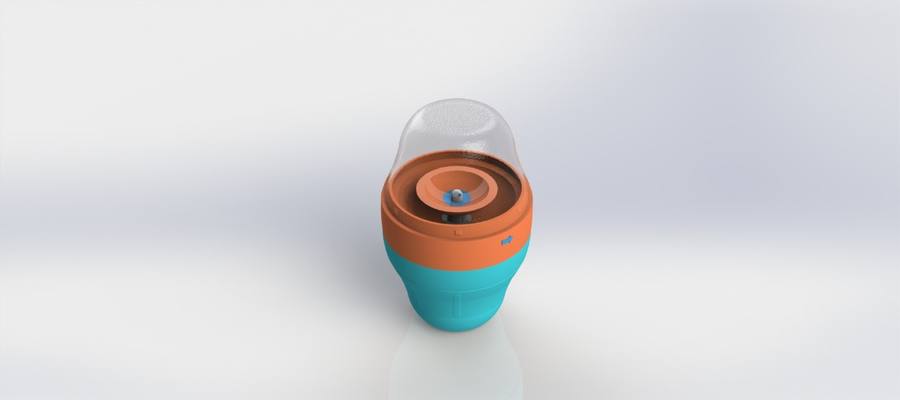
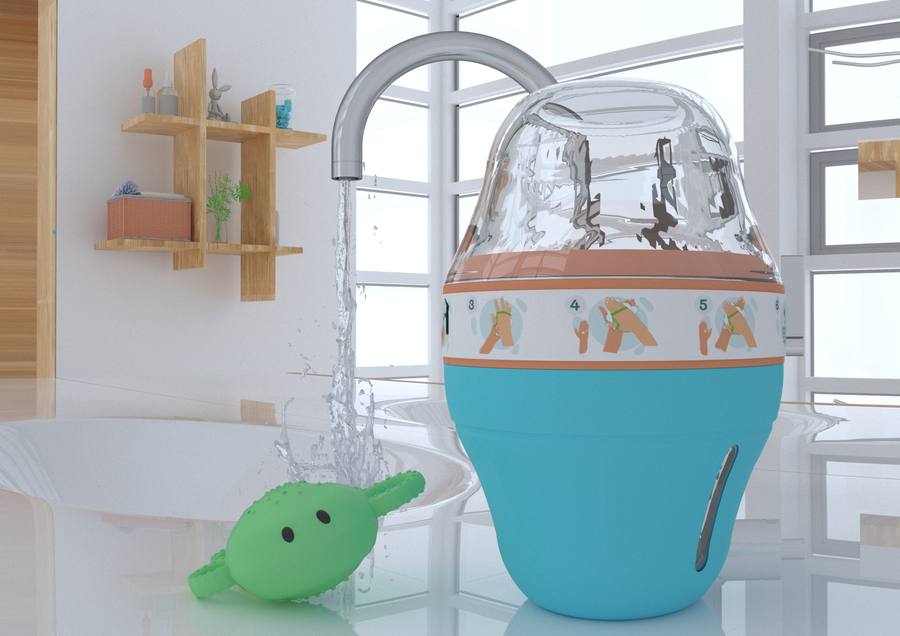
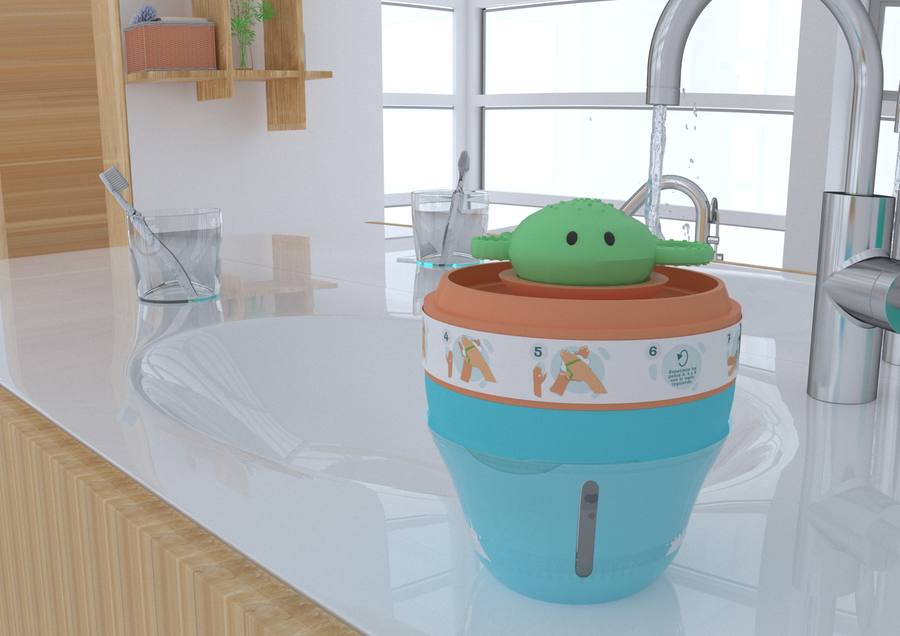
Tangible — CLOOP Product. A soap dispenser with PULPI, a tactile silicone creature who lives on top. Children press PULPI down to get soap — the gesture is both functional and playful. A visual band wraps the dispenser showing the 7 steps of hand-washing.Tangible — Producto CLOOP. Un dispensador de jabón con PULPI, una criatura táctil de silicona que vive encima. Los niños presionan PULPI para obtener jabón — el gesto es funcional y lúdico a la vez. Una banda visual rodea el dispensador mostrando los 7 pasos del lavado de manos.
A soap dispenser with PULPI, a tactile silicone creature who lives on top. Children press PULPI down to get soap — the gesture is both functional and playful. A visual band wraps the dispenser showing the 7 steps of hand-washing.Intangible — CLOOP App. A companion app with the story of Emma and Lucas — two children who become heroes by fighting viruses. The app guides children through the washing steps synced with the physical product.Intangible — App CLOOP. Una app complementaria con la historia de Emma y Lucas — dos niños que se convierten en héroes luchando contra los virus. La app guía a los niños por los pasos del lavado sincronizada con el producto físico.
Design principle: "The story and the object must work together — neither alone is enough. The app gives meaning to the gesture; the product makes the gesture real."Principio de diseño: "La historia y el objeto deben funcionar juntos — ninguno por sí solo es suficiente. La app le da significado al gesto; el producto hace el gesto real."
Phase 04Fase 04
The process followed the logic of design thinking: define before building. Three formal directions were developed and evaluated first. Only once the concept was selected did physical prototyping begin.El proceso siguió la lógica del design thinking: definir antes de construir. Primero se desarrollaron y evaluaron tres direcciones formales. Solo una vez seleccionado el concepto comenzó el prototipado físico.
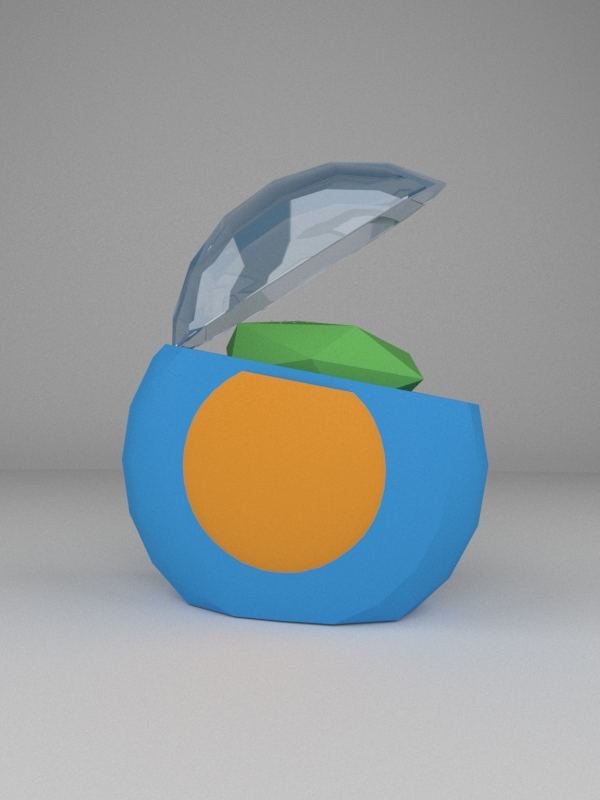
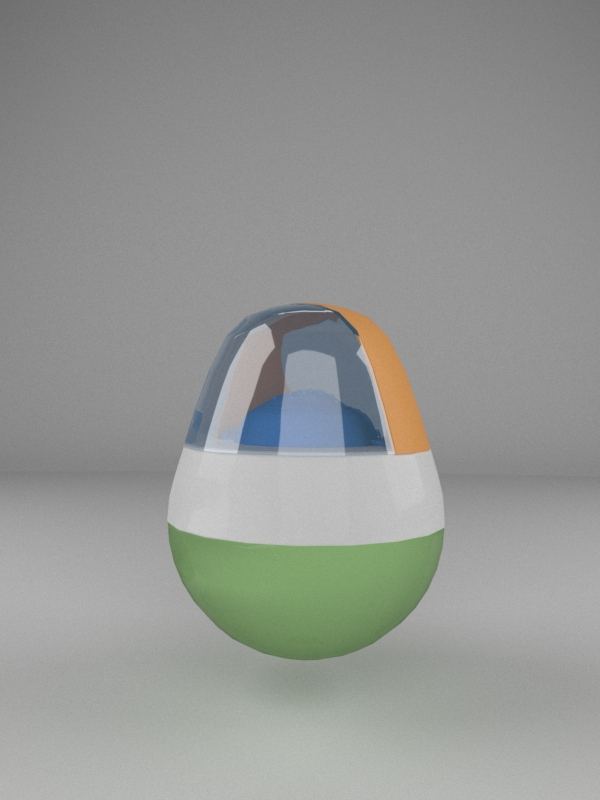
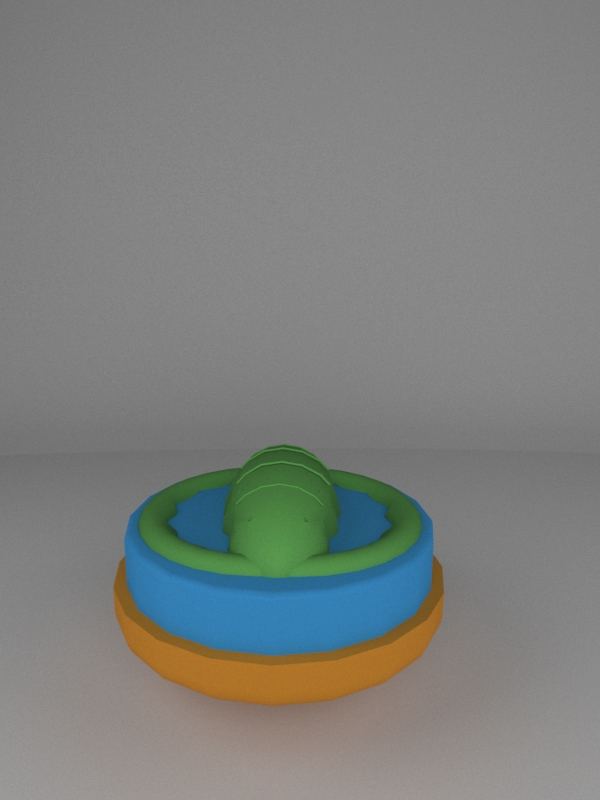
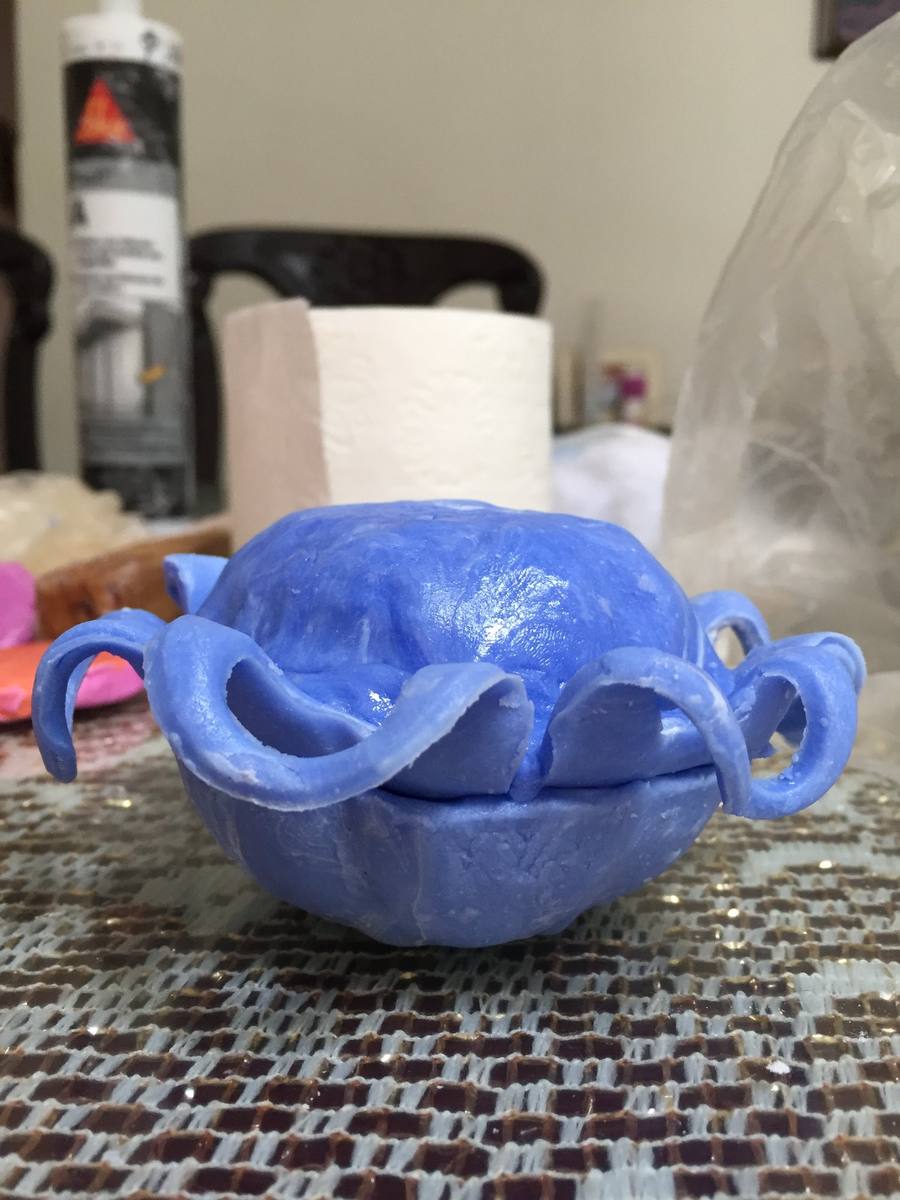
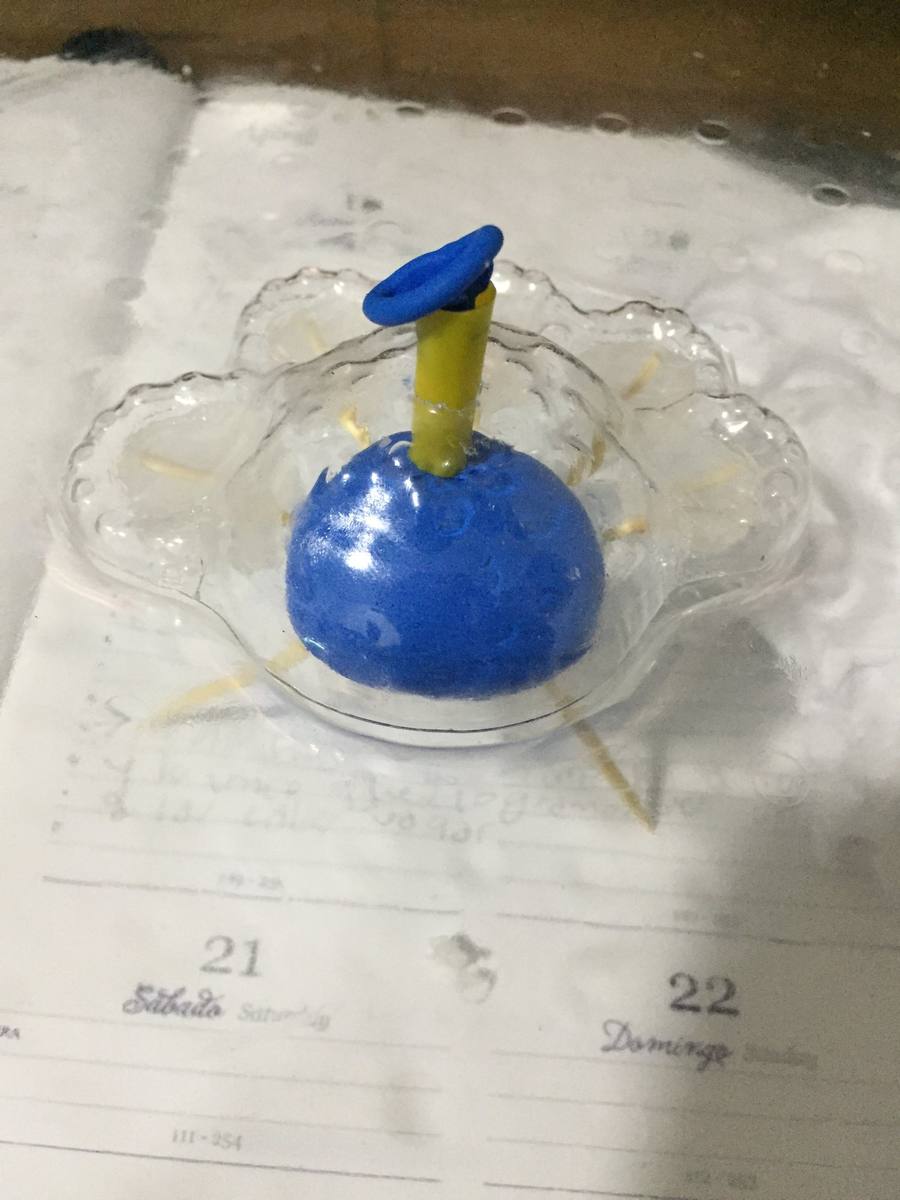
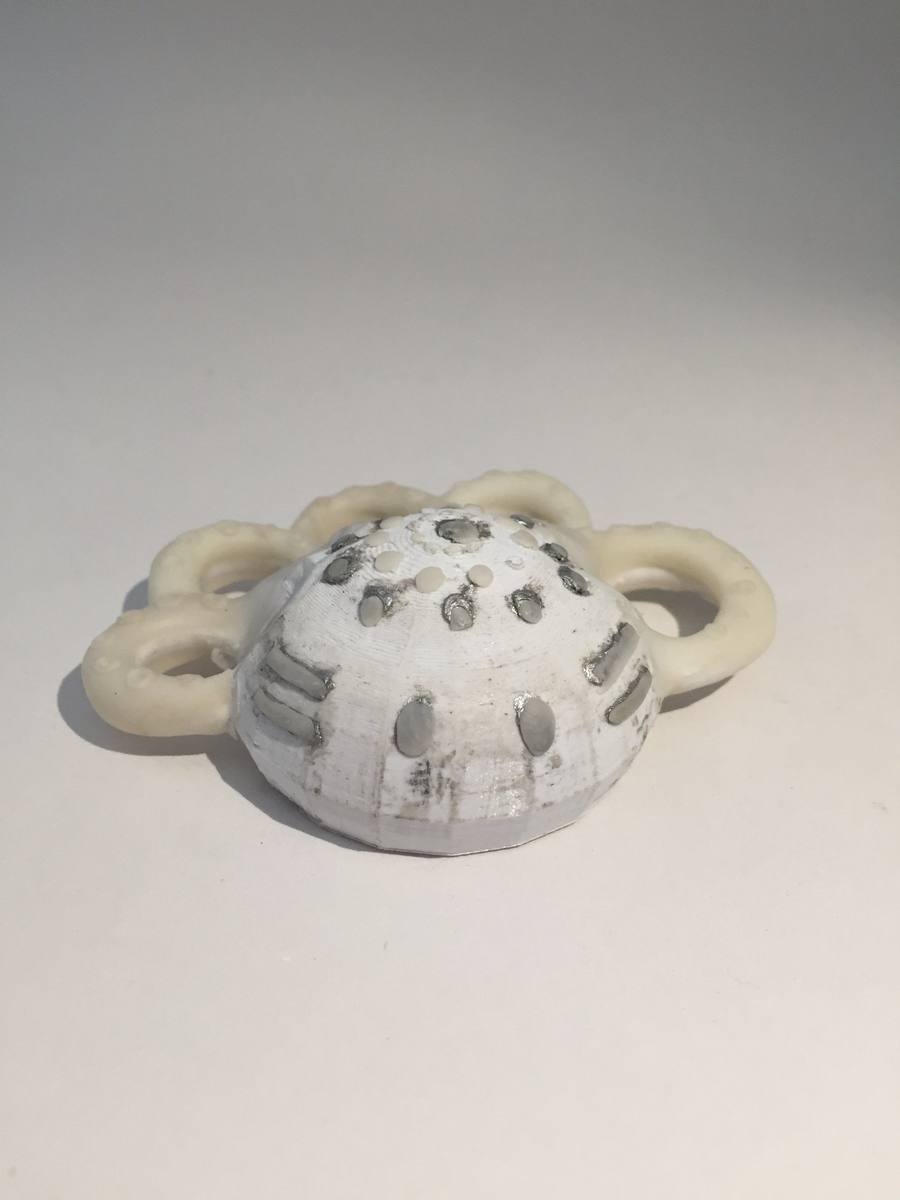
From design alternatives to clay modeling to 3D printed prototype — the full physical iteration processDe las alternativas de diseño al modelado en arcilla y el prototipo impreso en 3D — todo el proceso de iteración física
Key insight from prototyping: The silicone texture of PULPI emerged from the third clay iteration — early models were too rigid and failed to convey the playful tactile quality that drives a child's desire to press it repeatedly.Aprendizaje clave del prototipado: La textura de silicona de PULPI emergió en la tercera iteración de arcilla — los modelos anteriores eran demasiado rígidos y no transmitían la cualidad táctil lúdica que impulsa el deseo del niño de presionarlo repetidamente.
Phase 05Fase 05
PULPI lives on top of the soap dispenser — pressing it down triggers the soap release. A visual band wraps the dispenser showing the 7 steps of hand-washing. The final KeyShot render shows the product in context.PULPI vive encima del dispensador de jabón — presionarlo activa la salida del jabón. Una banda visual rodea el dispensador mostrando los 7 pasos del lavado de manos. El render final en KeyShot muestra el producto en contexto.
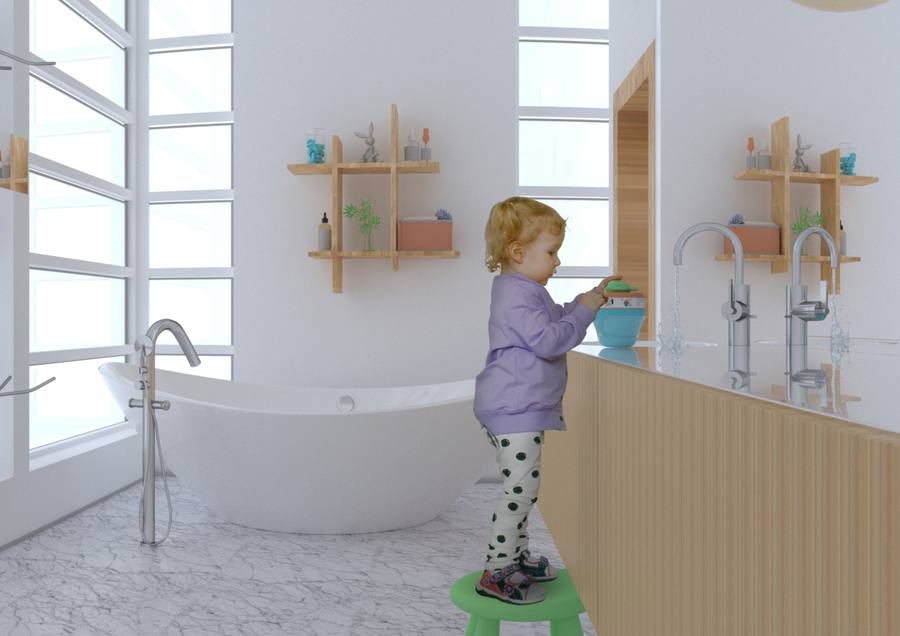
Human scale — child using the product in real contextEscala humana — niño usando el producto en contexto real
Phase 06Fase 06
Before any screen was designed, the story was storyboarded — 14 scenes mapping the arc from virus encounter to heroic handwashing. This ensured the narrative logic held before any UI decisions were made.Antes de diseñar cualquier pantalla, se creó el storyboard de la historia — 14 escenas que mapean el arco desde el encuentro con el virus hasta el lavado heroico de manos. Esto aseguró que la lógica narrativa fuera sólida antes de tomar decisiones de UI.
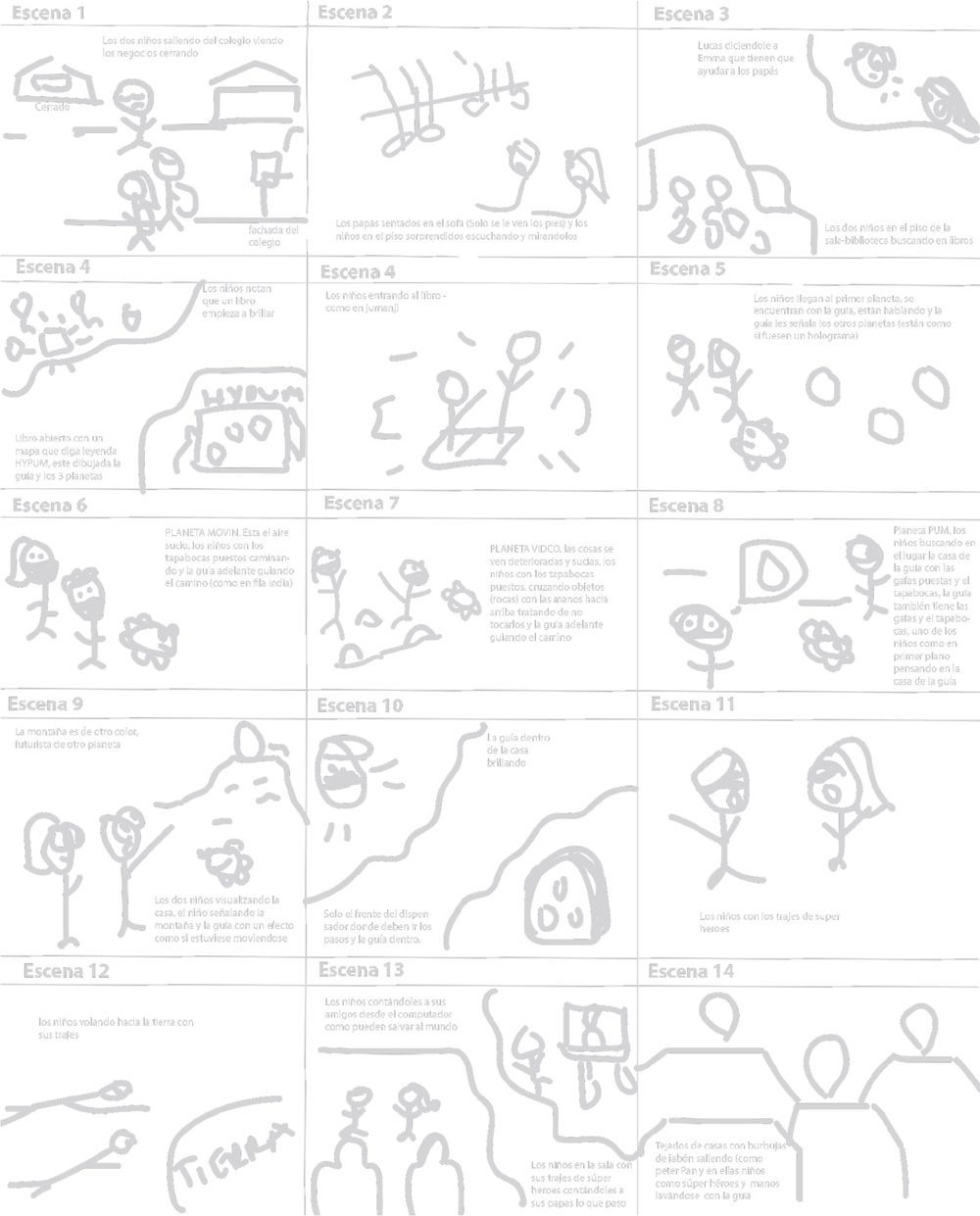
CLOOP storyboard — 14 scenesStoryboard de CLOOP — 14 escenas
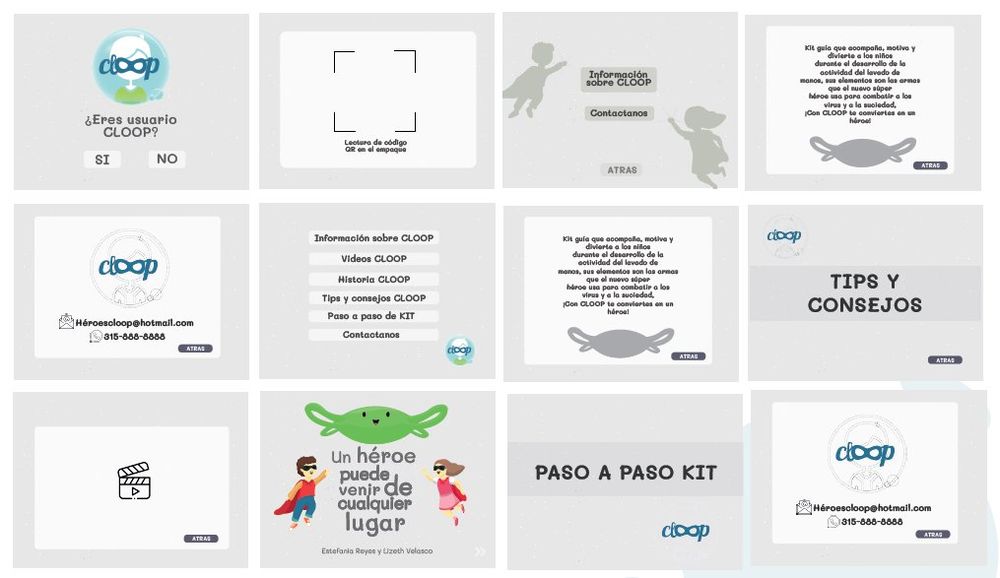
CLOOP wireframes — full system mapWireframes de CLOOP — mapa del sistema completo
The wireframes mapped the full system — QR onboarding, menu navigation, story mode and wash guidance — before visual design began.Los wireframes mapearon el sistema completo — onboarding por QR, navegación por menú, modo historia y guía de lavado — antes de que comenzara el diseño visual.
The final app screens carry the warmth of the PULPI character throughout — bright colors, large tap targets, and minimal text designed for early readers.Las pantallas finales de la app mantienen la calidez del personaje PULPI — colores vivos, áreas de toque amplias y texto mínimo diseñado para lectores tempranos.


Final app screens — story, wash guide, and gamesPantallas finales — historia, guía de lavado y juegos
Phase 05
Validation was conducted remotely during the COVID-19 lockdown — a constraint that, unexpectedly, became a methodological advantage. Sessions were observed via video call, which allowed both the child and the parents to be in their natural context.La validación se realizó de forma remota durante el confinamiento por COVID-19 — una restricción que, inesperadamente, se convirtió en una ventaja metodológica. Las sesiones se observaron por videollamada, lo que permitió que tanto el niño como los padres estuvieran en su contexto natural.
The most significant finding emerged from the presence of parents: when parents engaged with the CLOOP narrative, children's session duration increased by approximately 40% compared to independent use. This reshaped the final design — the app was updated to include a cooperative mode where the parent plays a supporting character alongside the child.El hallazgo más significativo emergió de la presencia de los padres: cuando los padres se involucraban con la narrativa de CLOOP, la duración de la sesión de los niños aumentó aproximadamente un 40% en comparación con el uso independiente. Esto redefinió el diseño final — la app se actualizó para incluir un modo cooperativo donde el padre juega como personaje de apoyo junto al niño.
Children self-initiated washing 3× more frequently during the testing week compared to baseline observation before the product was introduced.Los niños iniciaron el lavado por sí mismos 3 veces más frecuentemente durante la semana de prueba en comparación con la observación de línea base antes de introducir el producto.
PULPI as tactile anchor. Children returned to the product between sessions unprompted — handling PULPI became part of bathroom routine independently of hand-washing.PULPI como ancla táctil. Los niños volvían al producto entre sesiones sin que nadie se los pidiera — manipular PULPI se convirtió en parte de la rutina del baño independientemente del lavado de manos.
Limitation: Remote testing prevented direct tactile observation. A second validation round with in-person access was planned but not executed before the RAD 2021 submission deadline.Limitación: El testing remoto impidió la observación táctil directa. Una segunda ronda de validación presencial fue planeada pero no ejecutada antes del plazo de entrega al RAD 2021.
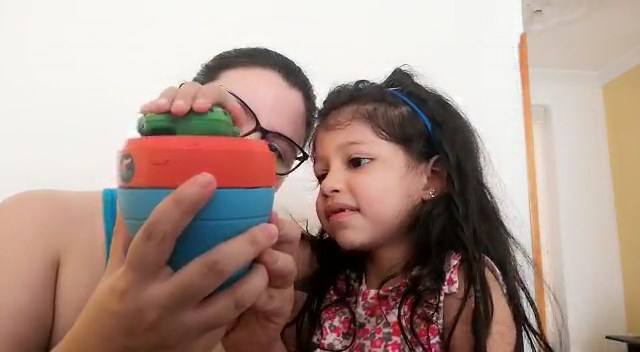
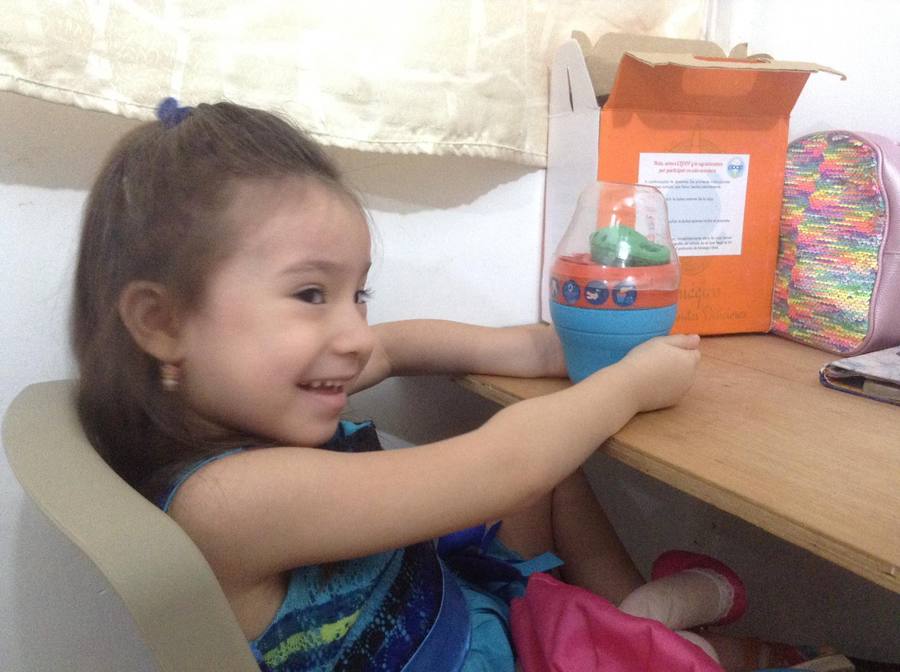
Usability testing sessions — remote validation during COVID-19 lockdownSesiones de usability testing — validación remota durante el confinamiento por COVID-19